Quick answer
An AC can reach its temperature setting while the home remains humid. Confirm the pattern with temperature and relative-humidity readings, then investigate moisture sources, ventilation and the way the cooling system operates. A lower thermostat setting, another cleaning visit or a larger AC is not automatically the solution.
This guide is for a Dubai home that feels cool but clammy, has persistent condensation or shows elevated room humidity. It is not a general no-cooling guide, a medical assessment or a shopping list for dehumidifiers. The aim is a brief that helps the right technical-services provider identify the cause and demonstrate whether the proposed work changes it.
Start with a log, not one number from the thermostat
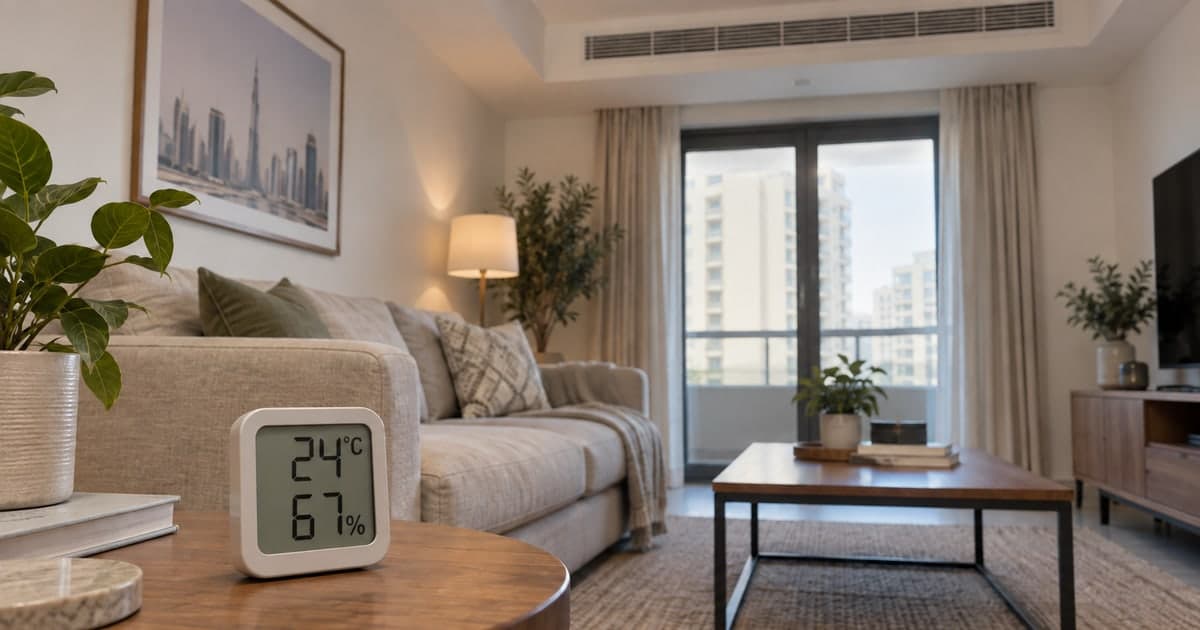
Use a room temperature/humidity meter according to its instructions, away from a direct supply-air jet, wet surface or direct sun. Allow it to settle as instructed and record comparable locations over normal occupied periods. A consumer sensor is useful for a pattern, but its accuracy and placement limit what one reading can prove. Do not take apart the AC or enter a ceiling void to collect data.
| Record | Example of useful information | Why it helps |
|---|---|---|
| Room, time, temperature and RH | Bedroom in the evening; living room at a comparable time. | Separates a room-specific pattern from a whole-home issue. |
| Cooling operation | Controller setting/mode and whether cooling runs briefly or for sustained periods. | Reaching the temperature setting does not describe moisture removal by itself. |
| Ordinary moisture events | Shower, cooking, indoor laundry or an open balcony door. | Helps the assessor relate the reading to how the home was being used. |
| Visible signs | Persistent droplets at a grille, wet patch or condensation location. | Guides a separate check of local cold surfaces, insulation or leakage. |
| Recent changes | New AC, altered thermostat, renovation, window sealing or building ventilation work. | A changed system or room can need a fresh assessment. |
US EPA moisture guidance recommends keeping indoor RH below 60%, ideally 30–50% where possible. This is general guidance, not a Dubai legal limit, a guaranteed operating target for every system or a medical diagnosis. Persistent elevated readings or wet surfaces warrant investigation; a brief post-shower reading should be interpreted with its context.
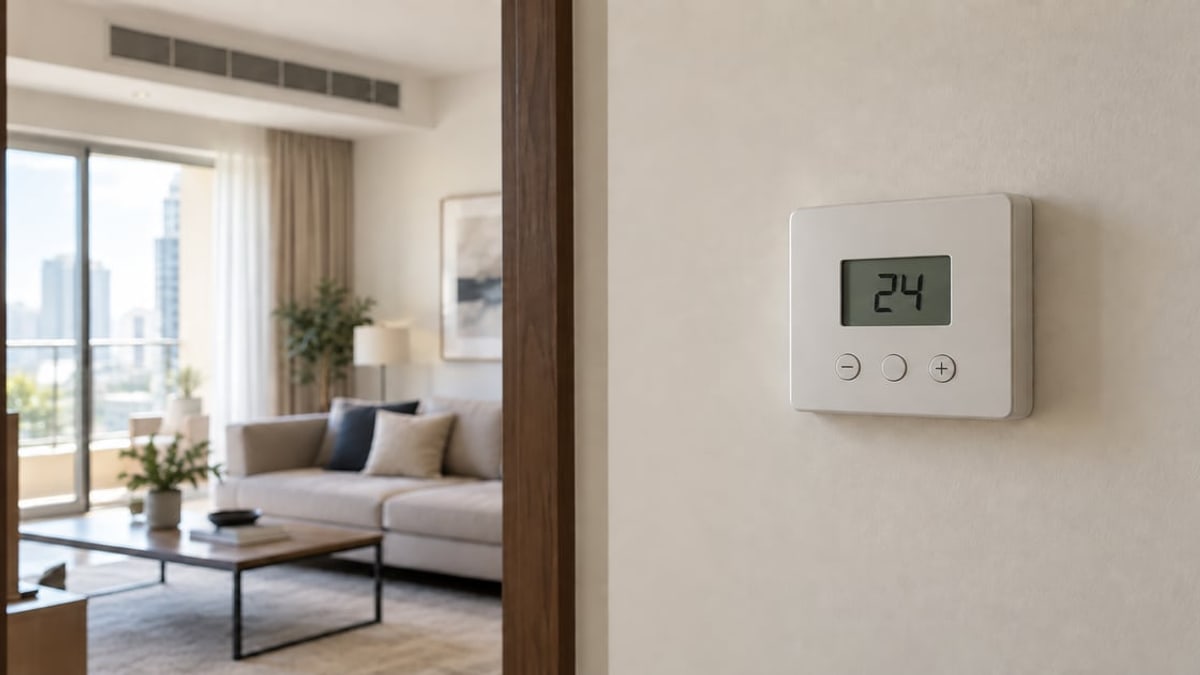
Why a cool room can still have a moisture problem
Temperature control and moisture control are related but not identical. Cooling can remove moisture at the coil, while outside air, occupants, wet activities or a leak can add it. Relative humidity also depends on temperature, so compare both readings rather than treating a falling temperature as proof that the air has become drier.
Carrier explains that short cycling can impair humidity removal and can have several causes, including controls, airflow restrictions and equipment sizing. High humidity alone does not prove the AC is oversized. Replacing a unit before checking operation and moisture inputs risks paying for the wrong remedy.
Ask the assessor to separate these four work areas
| Work area | Evidence to request | Do not assume |
|---|---|---|
| AC operation | Relevant temperature/RH, airflow, cycling and control observations for the installed system. | A bigger unit or a refrigerant top-up will cure every damp-feeling room. |
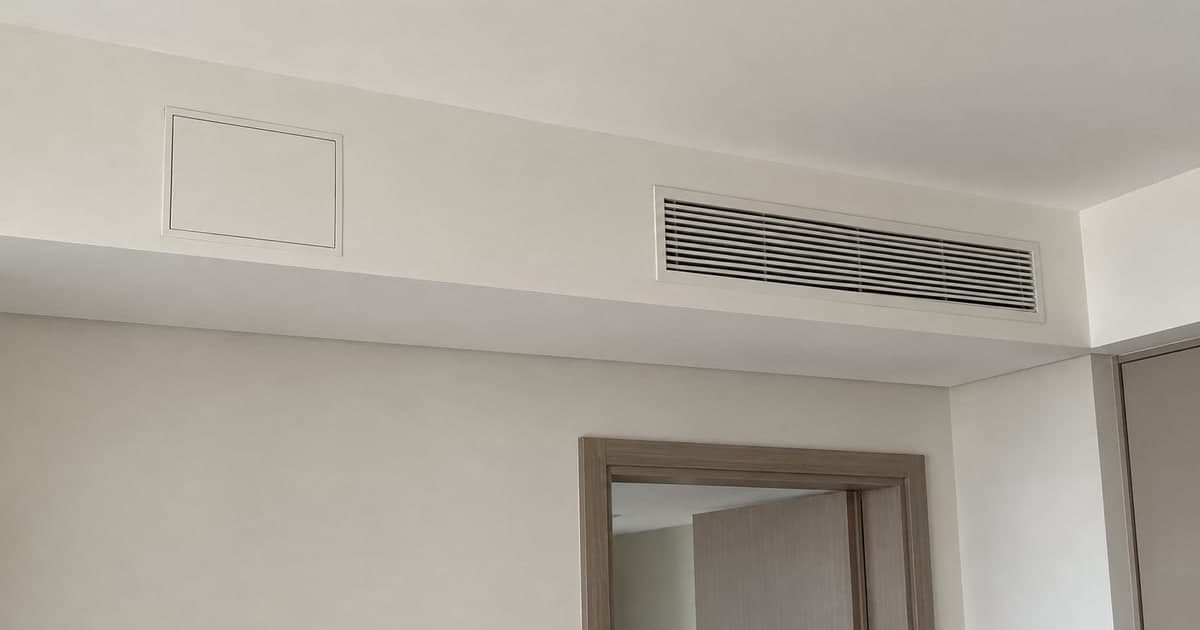
| Ventilation and outside-air entry | How intended supply/extract and doors/windows affect the pattern; shared-system coordination where needed. | Blocking a fresh-air grille is an acceptable moisture fix. |
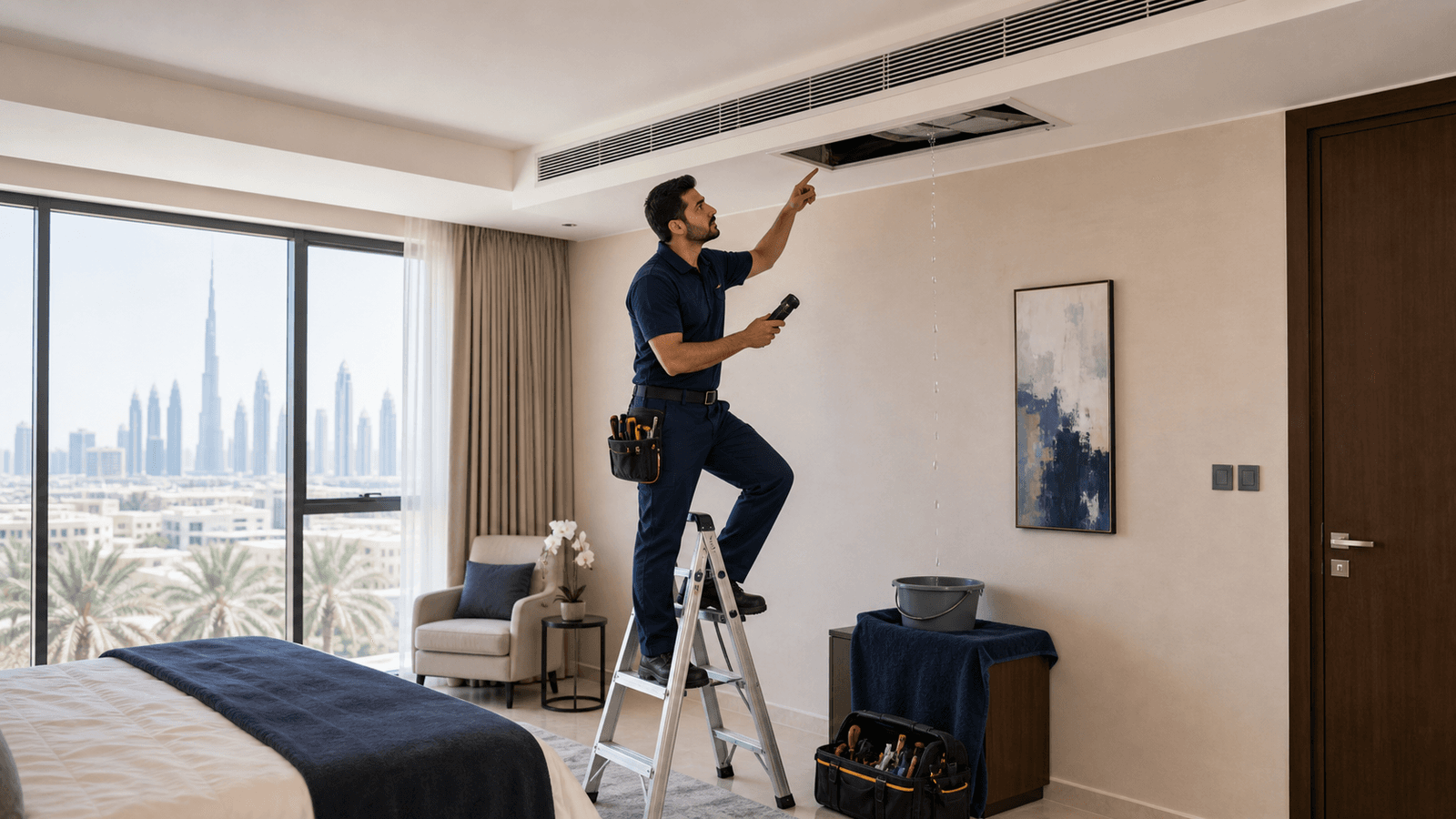
| Local condensation or insulation | Where moisture forms, condition of accessible insulation and the suspected mechanism. | Every wet ceiling is caused by high room humidity. |
| Water leakage or another moisture source | A defined investigation of the observed leak or wet material, with separate repair scope. | AC cleaning fixes plumbing, façade or roof leaks. |
Trane's condensation guide discusses duct leakage, insulation, ventilation, airflow and condensate drainage as different assessment areas. These are possibilities to investigate, not a checklist of services to buy together. Ask which finding supports each recommendation and what was outside the visit's scope.
What you can change safely while arranging help
Follow your system's operating manual and the building's ventilation instructions. Avoid leaving exterior doors or windows open for long periods while cooling on humid days, and report a bathroom extract fan that is not working. Do not seal designed ventilation openings, alter concealed dampers or change installer-only controls to chase a number. Do not repeatedly lower the thermostat to very cold settings as a substitute for diagnosis.
If water is leaking near electrical equipment or a ceiling is sagging, keep clear and contact maintenance promptly. Visible suspect growth or persistent wet material calls for appropriate moisture/remediation advice; do not disturb concealed affected materials or assume an air-freshening treatment solves the source. Anyone with health concerns should consult a qualified healthcare professional rather than rely on this maintenance guide.
A useful Dubai investigation quote is more than an AC wash
Saniservice's Dubai assessment page includes room-by-room temperature/RH and airflow or ventilation measurements with documented findings. That demonstrates a broader measurement scope than a routine wash. It does not mean every humid home needs every laboratory or air-quality test. Ask what decision a proposed test will inform and whether a simpler HVAC or leak investigation should come first.
- Define the rooms, units and period of observation covered. A short visit and longer-term logging answer different questions.
- Ask for the measurement method, conditions, relevant equipment and report, including uncertainty or areas not inspected.
- Separate investigation from coil/drain work, duct repair, ventilation adjustment, leak repair, testing and new equipment.
- Confirm access to concealed units or shared building systems and who obtains permission for any alteration.
- Agree a verification plan after the work using comparable conditions, with tax, visit credits and return-visit terms clear.
No reliable standard Dubai price for this complete humidity investigation was established in this review. A generic AC-cleaning price is not a measurement-and-diagnosis package. Compare actual quotes once the rooms, tests and deliverables are defined; avoid invented per-bedroom humidity-repair allowances.
Should you buy a dehumidifier first?
A suitably selected dehumidifier may be part of a professional recommendation, but purchasing one should not conceal an active leak or replace investigation of a malfunctioning system. Ask about capacity under your operating conditions, safe drainage, electrical supply, noise, maintenance and the reason it is needed. The amount of water collected is not, on its own, proof that the underlying building issue is solved.
If the issue is an actual AC drip, use the AC leaking-water guide. If odour appeared after cleaning, use the post-cleaning AC smell guide. For a bathroom extract fault, see the bathroom exhaust-fan repair guide. These may overlap with humidity, but each has a distinct repair scope.
Send your simple log, recent changes and safely taken context photos. Crop or blur names, unit numbers, addresses, documents, account details, serial labels and unrelated faces. Share necessary access information only through private booking details.
Read the AC Repair Services in Dubai service overview before enquiring. Confirm that the provider accepts the precise repair or installation scope described here, then send the same brief when comparing quotes.
Request an AC and moisture-control assessment
Explain that the home cools but humidity remains high, and share the room readings. Compare quotes for free with measurements, diagnosis, exclusions and post-work verification specified.
Compare Quotes for FreeFrequently asked questions
Can AC cool the room without controlling humidity well?
Yes. Reaching the temperature setting does not prove adequate moisture removal under the actual operating conditions. Log temperature and RH and request an assessment of both the system and moisture sources.
What indoor humidity should I aim for?
US EPA general guidance is below 60% RH, ideally 30–50% where possible. It is not a Dubai legal limit or a remote equipment setting; interpret readings with the room conditions and professional advice.
Does high humidity mean my AC is oversized?
Not necessarily. Oversizing can contribute to short cycling, but controls, airflow, moisture inputs and other issues also matter. Do not replace the unit based on one humidity reading.
Will AC duct cleaning fix humidity?
Only if the identified issue is one that the agreed cleaning scope addresses. Ventilation, insulation, leakage, controls or drainage may require different work. Ask for evidence before adding services.
Should I block the fresh-air vent to stop damp air?
No. Do not block designed ventilation or alter concealed controls. Ask an appropriately qualified provider and building management to assess the ventilation arrangement.
Is a dehumidifier a permanent fix?
It may be appropriate in a reviewed moisture-control plan, but it does not repair leaks or prove the AC and ventilation are operating correctly. Define the cause and verification plan first.
Sources and review method
Reviewed 17 September 2026 by Bestimate Editorial Team. Official general moisture guidance, manufacturer HVAC explanations and a Dubai measurement-service scope inform this decision guide. It makes no medical diagnosis, universal humidity guarantee, local code claim or fabricated repair-price estimate.